Product · First trade: garage doors
AI diagnostics and dispatch for home services
The homeowner talks and sends photos. The shop gets a diagnosis, the right tech, the parts to load and the truck logistics, before anyone drives.
ProofBuilt on 204 real cases. Cleared 11 of 11 structural acceptance gates.
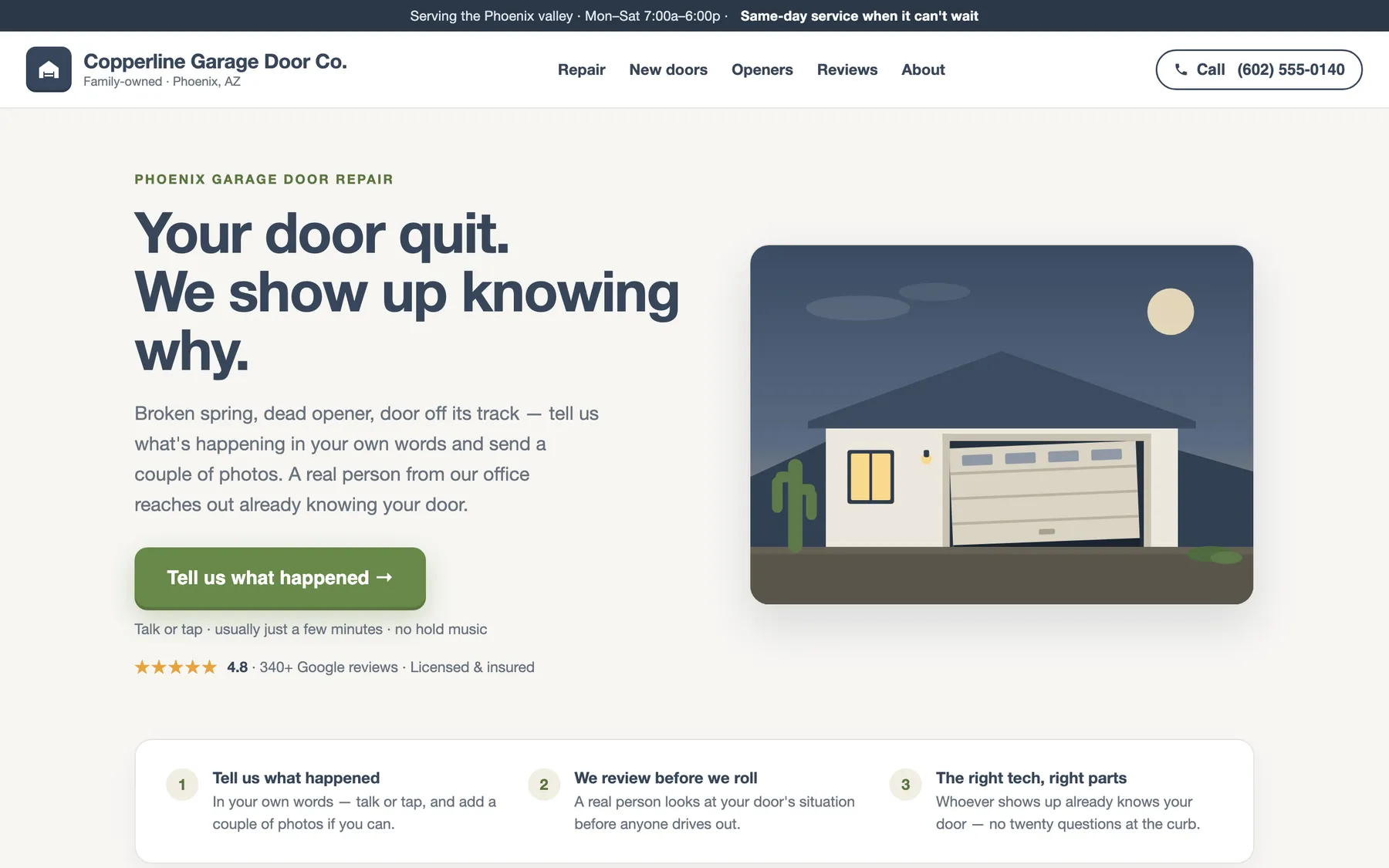
Copperline is a fictional company I built for the working demo. Its reviews and phone number are invented.
My role
Conceived it. Did the research, design and architecture. Built it, the demo company’s site included.
Results
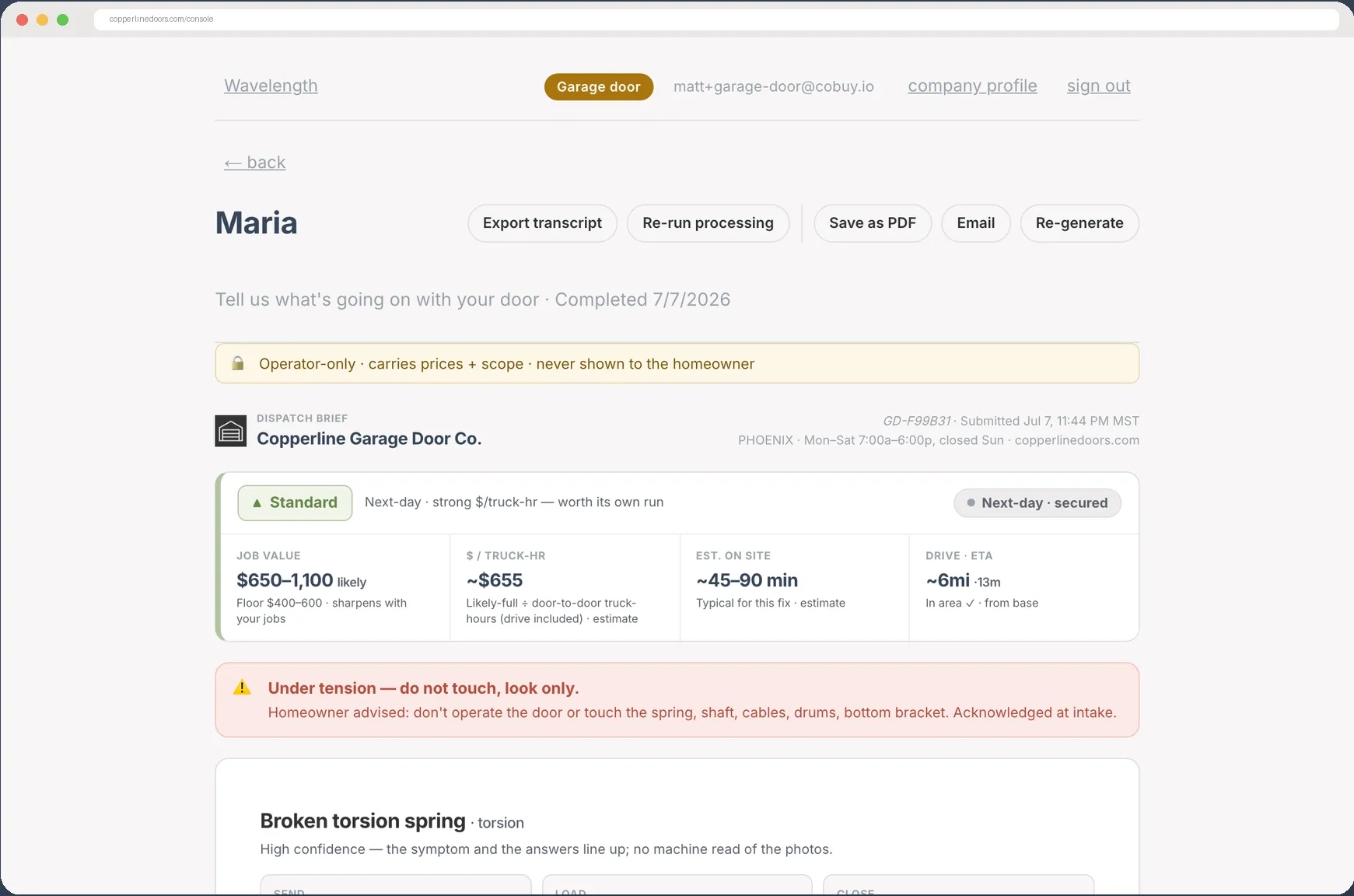
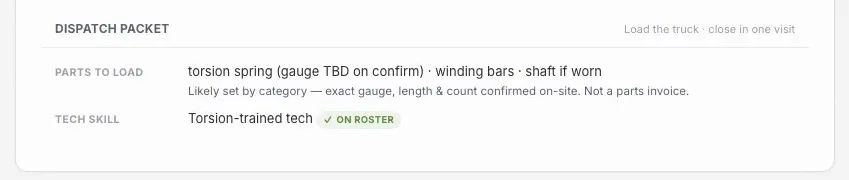
- Diagnosis, tech match, parts and truck logistics in one brief, built the moment the homeowner finishes.
- Estimates job value and revenue per truck-hour, including drive time.
- A corpus of 204 real cases, mined from 504 source candidates.
What it is
A home-services dispatcher takes a call from someone who can’t describe what’s broken. The tech arrives without the part. Second trip. Lost margin.
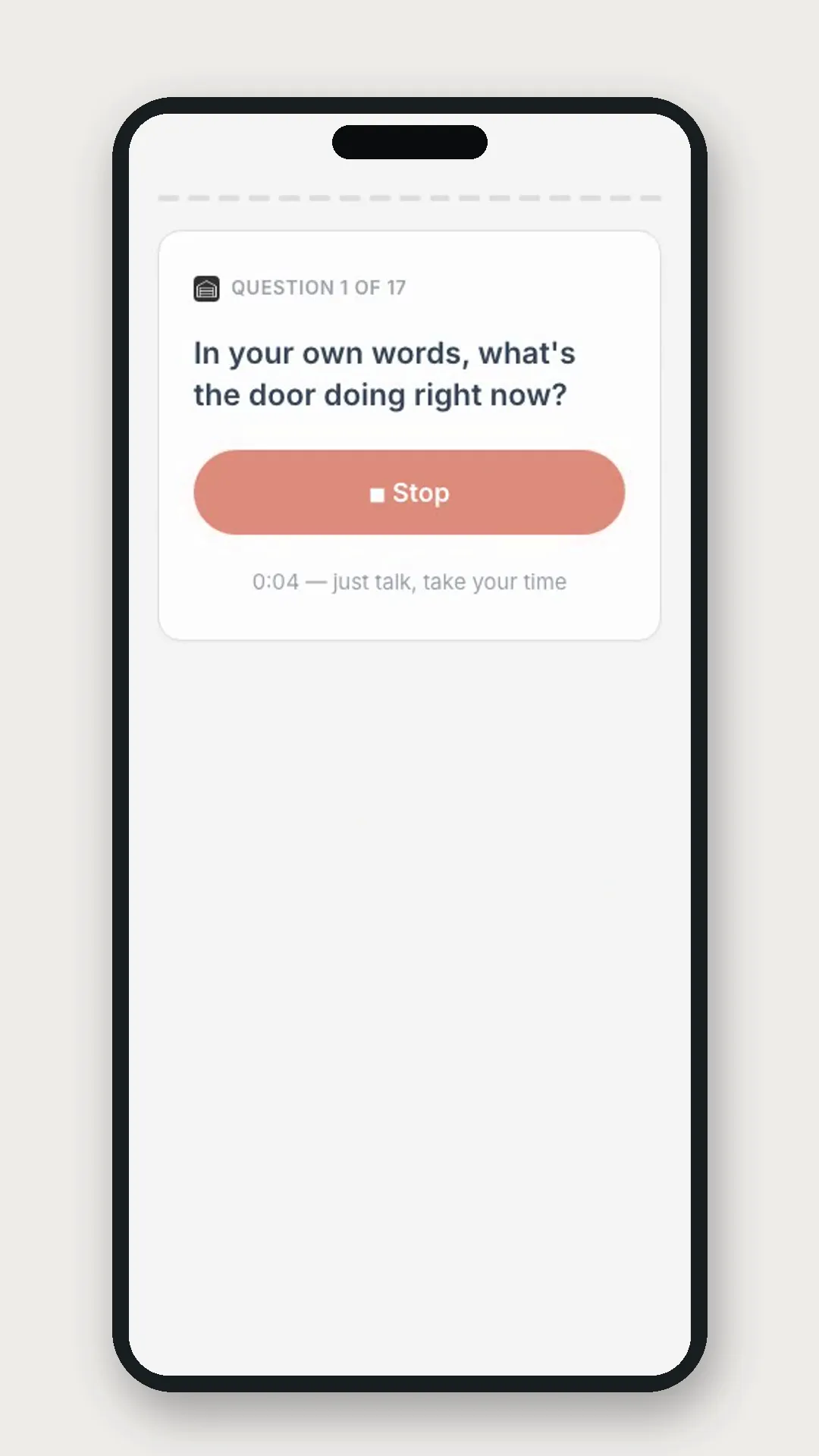
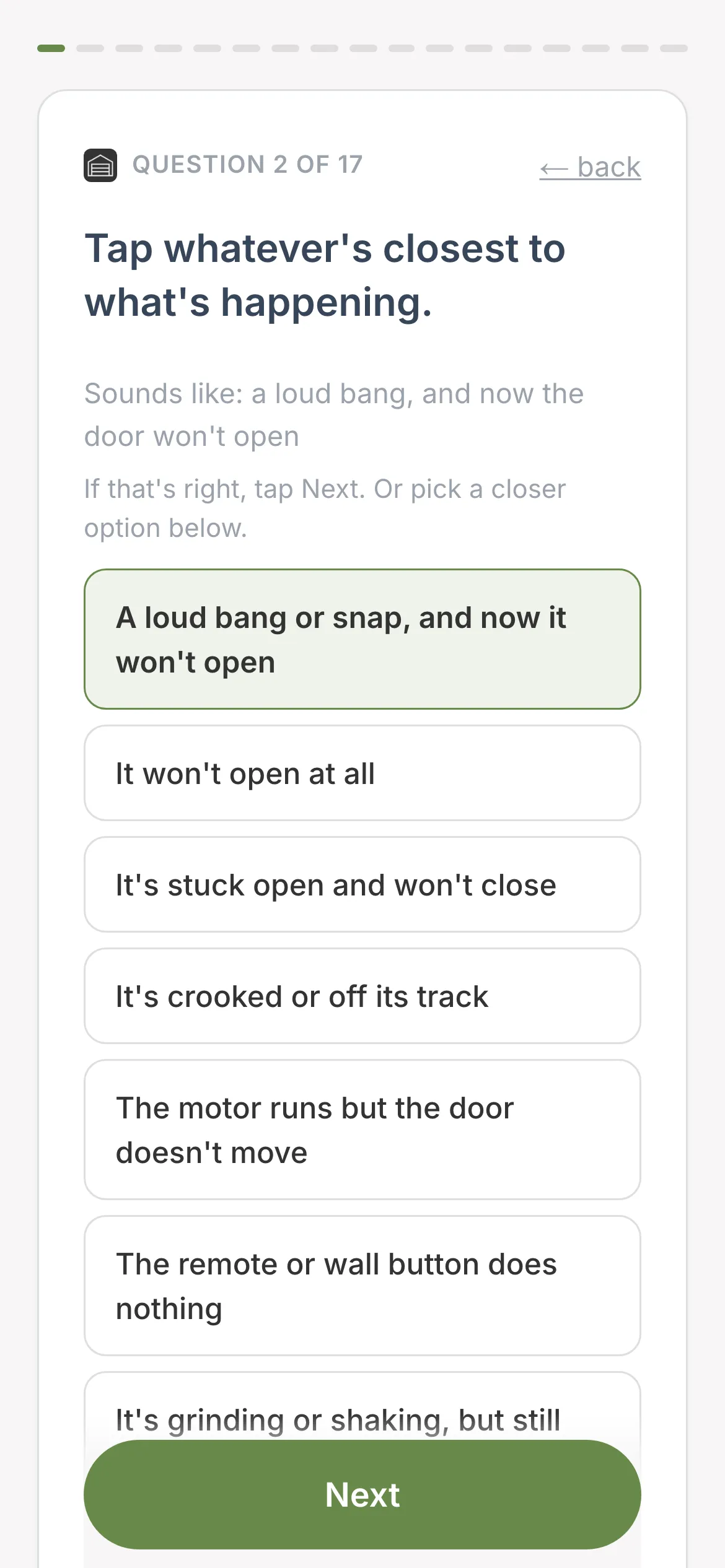
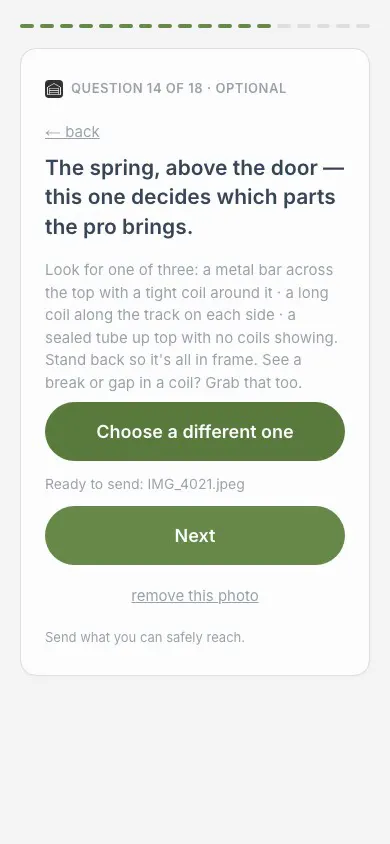
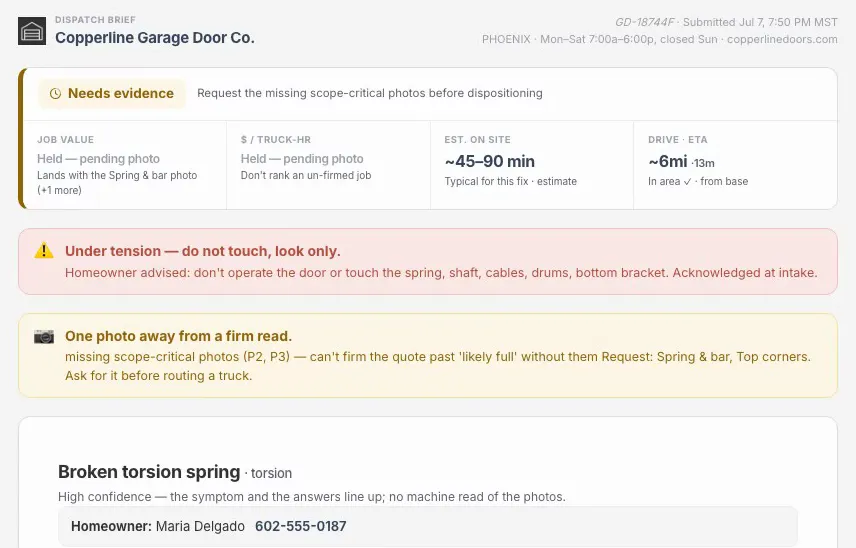
This fixes the first five minutes. The homeowner taps one button on the shop’s site, says what’s wrong in her own words, and sends a couple of photos. The system reads it against hundreds of real cases and hands the shop a brief: what’s broken, who to send, what to load, roughly what it’s worth, and how sure it is.
I built it for garage-door companies first. I’d never worked in the trade. That was the point. Different industry, same approach: start with the problem, work the solution, then build the system.
Watch it work
Screens

More proof
- It flags safety first. A door under tension gets a warning before anything else.
- It says what it doesn’t know. With no photos, it holds the job value instead of guessing.
- The recognition layer is grounded in how homeowners describe a broken door.
- It sits beside the shop’s own website and phones. Nothing gets ripped out.
- It runs on the same foundation as Wavelength, and it’s shaped per trade.
Related work